Introduction
What Real Luxury in a Pillow Actually Means
There is a version of luxury that is about branding. A high price, a premium box, a hotel-sounding name. The pillow looks expensive sitting on the bed. And for the first week, it feels that way too.
Then it starts to flatten. Or it retains heat in a way that makes warm nights miserable. Or it develops a synthetic smell after a few months. The luxury was in the marketing not in the material.
Real sleep luxury is simpler to define: a pillow that feels genuinely comfortable to sleep on, that stays comfortable through the night, that does not cause the restlessness and overheating that disrupts rest, and that holds its character through months and years of daily use.
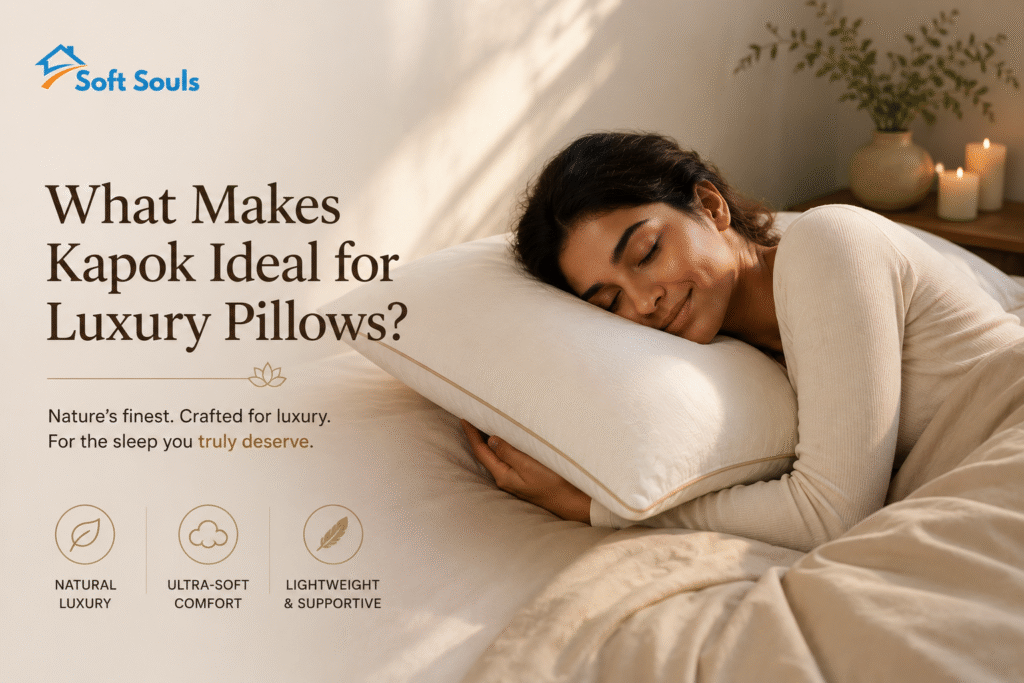
This is why kapok has been quietly gaining attention as a kapok ideal luxury pillow filling not because of how it is packaged, but because of what it is. A plant-based hollow fibre with a silky texture, exceptional lightness, natural breathability, and properties that continue to perform after the novelty of a new pillow has worn off. This guide examines what makes kapok genuinely premium, and why it sits comfortably among the luxury bedding materials worth considering for everyday sleep.
What Makes a Pillow Feel Luxurious?
Luxury in a pillow is often associated with softness. But softness that disappears after three months of use is not luxury it is novelty. Genuine luxury requires a specific combination of properties that sustain comfort across the full life of the pillow.
Softness is the entry point. A pillow should yield gently under the head without creating resistance or pressure points. The surface texture should feel smooth against skin, not scratchy or synthetic.
Loft is the pillow’s height and plushness. A visually full, well-shaped pillow signals quality before the head even touches it. More importantly, the loft should be maintained through the night rather than collapsing into a flat layer.
Support keeps the head and neck in a natural position. Luxury without support is just softness comfortable briefly but contributing to morning stiffness over time.
Breathability is often overlooked in discussions of luxury, yet it determines how the pillow performs past the first hour. A pillow that traps heat becomes progressively more uncomfortable as the night continues. Genuine luxury bedding materials allow heat to escape rather than accumulate.
Durability determines how long all of the above properties hold. A luxury pillow should maintain its comfort character for years, not months.
Sleep comfort the actual experience of falling asleep and staying asleep on the pillow is the sum of all these properties together. Everything else is preparation.
What Is Kapok Fiber?
Kapok is a plant-based fibre harvested from the seed pods of the Ceiba pentandra tree called the Ilavam tree in South India, where the fibre is known as Illavam Panju. When the pods ripen, they burst open naturally and release clusters of silky, cream-coloured fluff. This fluff is collected and cleaned no trees are cut, and no synthetic chemicals are used in the harvesting process.
The physical structure of kapok is its defining quality: each individual fibre is hollow. Not just fine and lightweight actually hollow, with a sealed interior. This hollow structure is what gives kapok its exceptional lightness, its natural breathability, and its silk-like feel.
In South Indian homes, kapok was a standard material in pillows and thin mattresses for generations. It fell out of widespread use when synthetic polyester became cheaper to produce at scale. Its current resurgence reflects a recognition that its properties which traditional households valued for practical reasons are exactly what discerning modern sleepers are looking for in a premium pillow filling.
Why Is Kapok Considered a Premium Pillow Material?
Exceptional Softness
The texture of kapok fibre is silky and smooth. It does not have the rough or synthetic quality of polyester, nor the dense heaviness of down. It feels fine, almost weightless, against the hand. Against skin during extended contact which is what a pillow actually does for 7–8 hours this silky quality translates into a surface that is gentle, non-irritating, and consistently pleasant.
This is the softness of a natural luxury pillow not engineered through chemical softeners that wear off with washing, but inherent to the plant fibre itself.
Lightweight Comfort
A full-sized kapok pillow weighs noticeably less than a comparable polyester or down pillow. This reduced weight creates less pressure at the head and neck contact point which means better circulation, less localised warmth, and a lighter, more effortless sleeping posture. For a premium sleep experience, the absence of heaviness is part of the luxury.
Plush Loft
Kapok fill creates a visually lofty, airy pillow that maintains its shape well. The hollow fibre does not compact into a dense layer the way polyester fill does over months of use. Regular daily fluffing restores the airy structure easily. The result is a pillow that continues to look and feel properly filled rather than gradually sagging toward the mattress.
Natural Breathability
The hollow fibre structure that gives kapok its lightness also provides its breathability. Air circulates through the fill continuously heat generated near the head moves through the fibre network and escapes rather than accumulating. This is what makes kapok a genuinely luxury kapok pillow experience for warm sleepers: the comfort does not degrade as the night progresses because the thermal environment around the head stays relatively stable.
Premium Sleep Feel
The combination of silky softness, lightweight feel, consistent loft, and natural breathability produces a sleep experience that is qualitatively different from what synthetic fills offer. It is not dramatic or instantly overwhelming. It is quietly, consistently comfortable the kind of comfort that is most apparent when trying to go back to something inferior afterward.
How Does Kapok Compare With Other Luxury Pillow Fillings?
| Material | Softness | Loft | Breathability | Sustainability | Luxury Feel |
| Kapok | Silky, light, airy | Airy, full, easy to maintain | Excellent hollow fibre ventilation | Very high pod-harvested, biodegradable | Natural, understated, sustained |
| Down | Dense, plush, cloud-like | Impressive when fresh | Moderate insulating in warm conditions | Moderate (animal-derived, ethical sourcing varies) | Traditional luxury, initial impression strong |
| Memory Foam | Firm, contouring | Low solid, compressive | Poor closed cell structure traps heat | Low petroleum-derived, non-biodegradable | Structured, supportive, not airy |
| Polyester | Springy, soft initially | Good initially; flattens quickly | Poor blocks internal airflow | Low synthetic, non-biodegradable | Budget-accessible; not premium |
| Cotton | Familiar, soft | Moderate; compacts over time | Good natural fibre | High (organic) / Moderate (conventional) | Natural feel; less airy than kapok |
Down’s dense plushness creates a strong first impression. Memory foam’s structured support suits specific needs. But for luxury bedding materials that combine softness, breathability, and sustainability particularly in Indian conditions where heat management matters kapok offers a distinctive combination that neither down nor foam replicates.
Why Do Hot Sleepers Often Prefer Kapok?
Why do some luxury pillows feel comfortable only for a few months and then start to feel warm and heavy? The fill material is almost always responsible.
For hot sleepers, the thermal experience of a pillow is as important as its initial softness. A pillow that feels wonderful for the first hour but accumulates heat through the night is not delivering consistent luxury it is delivering a declining experience.
Kapok addresses this through its hollow fibre structure. Air circulates continuously through the fill, carrying warm air away from the head rather than letting it build up. The moisture-resistant fibre surface prevents sweat from accumulating inside the fill, keeping the pillow drier and cooler through warm nights.
Kapok pillow benefits for hot sleepers in India are specific:
- Consistent airflow through the fill prevents progressive warmth accumulation
- Lightweight feel reduces localised body heat at the head-pillow contact point
- Moisture resistance keeps the surface drier in humid Indian conditions
- No need for cooling gel or engineered ventilation breathability is structural
For hot sleepers who have experienced premium pillows that felt luxurious in a shop but became uncomfortable on Indian summer nights, kapok’s thermal performance is the practical answer they were looking for
What Luxury Features Does Kapok Offer?
The kapok ideal luxury pillow properties can be summarised as:
- Cloud-like softness silky, fine texture that does not feel synthetic or rough; gentle against skin during extended contact
- Natural resilience the hollow fibre does not permanently compress; daily fluffing restores the airy structure
- Lightweight feel significantly lighter than down, foam, or polyester; creates less pressure and less localised heat
- Breathability hollow fibre ventilation allows continuous heat release; the sleeping surface stays relatively cooler through the night
- Sustainable sourcing harvested from naturally falling pods, without cutting trees or using synthetic chemicals; biodegradable at end of life
- Long-term comfort properties maintained with proper care for 3–5 years; does not degrade into a flat, compressed layer like synthetic fill
- Premium sleep experience the cumulative effect of all the above: consistent, quietly excellent comfort that becomes more apparent over time
Kapok vs Synthetic Luxury Pillows
| Feature | Luxury Kapok Pillow | Synthetic Luxury Pillow |
| Comfort | Silky, airy, sustained through the night | Plush initially; degrades over months |
| Heat Retention | Low hollow fibre ventilation releases heat | High synthetic fill traps body warmth |
| Breathability | Excellent natural internal airflow | Poor dense fill restricts air movement |
| Sustainability | Very high renewable, biodegradable | Low petroleum-derived, non-biodegradable |
| Durability | 3–5 years with regular fluffing | 12–18 months before significant loft loss |
| Maintenance | Sun-air fill; machine wash cover | Machine washable; accelerates loft loss |
| Luxury Perception | Natural, understated, material-led | Marketing-led; first impression strong |
The distinction between a luxury kapok pillow and a marketed synthetic alternative is the difference between sustained performance and a strong opening. Synthetic luxury pillows are designed to impress in the shop. Kapok’s qualities are most apparent after months of daily use when the synthetic alternative has compressed and the kapok is still airy, still breathable, still comfortable.
Why Are Luxury Bedding Brands Moving Toward Natural Materials?
Can a natural fibre really feel luxurious? The question is becoming rhetorical as the sleep industry evolves.
Consumer priorities are changing. The buyer who once chose a pillow based entirely on its immediate plush feel is now also asking what the pillow is made of, how long it will last, and whether the material involves unnecessary chemical exposure or environmental harm. These concerns are not peripheral they are becoming central to what premium means.
Luxury bedding materials today are evaluated on wellness credentials as much as comfort credentials. Organic cotton with GOTS certification. Natural latex with FSC certification. Kapok harvested sustainably. These are not niche considerations they are the direction luxury bedding is moving.
For Indian consumers where awareness of indoor air quality, chemical exposure, and sustainable living is growing in urban markets this shift is relevant and timely. The most naturally comfortable material for Indian sleep conditions is also the most sustainably sourced one. That alignment is not coincidental; it reflects genuine material quality rather than marketing positioning.
How to Choose a Luxury Kapok Pillow
- Loft preferences kapok naturally leans toward a fuller, airier loft. For sleepers who prefer a lower, flatter profile, check whether the pillow allows fill adjustment; some products allow adding or removing fill
- Sleeping position side sleepers need adequate loft to fill the shoulder-to-ear space; look for a fuller fill or adjustable option. Back and stomach sleepers typically find standard kapok loft comfortable
- Pillow firmness kapok is on the softer end of the natural fill spectrum. If firm, structured support is the priority, natural latex may be a more appropriate choice
- Pillow cover materials a premium pillow filling like kapok deserves an equally considered cover; organic cotton or mulberry silk covers complement the natural fill and enhance breathability at the surface
- Pillow maintenance fluff daily to maintain the airy structure; sun-air the fill every 2–4 weeks to refresh the natural properties; machine wash the cover regularly
- Long-term value a kapok pillow with proper care lasts 3–5 years. Factor this into the cost comparison against synthetic alternatives that require replacement every 12–18 months
Why Soft Souls Focuses on Premium Natural Sleep Comfort
For those looking for a genuine luxury kapok pillow designed with Indian sleep conditions in mind, Soft Souls (softsouls.in) is a brand worth knowing.
Soft Souls is an Indian sleep brand built around the belief that premium sleep comes from honest, natural materials not synthetic fill in a premium-priced box. Every pillow is handcrafted by Indian artisans using 100% pure Kapok (Illavam Panju) fibre wrapped in breathable organic cotton fabric, designed for the warmth and humidity of Indian conditions rather than adapted from cooler climate markets.
Their natural luxury pillow range includes:
- Standard and queen-size kapok pillow collections 100% pure Illavam Panju fill; silky, lightweight, airy, naturally hypoallergenic, chemical-free, and handmade; available for everyday Indian use
- Kids kapok pillow range lighter Illavam Panju fill in organic cotton covers; breathable and gentle for children in warm climates
- Mulberry silk pillowcases and organic cotton pillow covers premium surface options that complement the natural fill; silky, breathable, and gentle against skin
- GOTS-certified organic cotton bedsheets Earth-Tone Naturals collection; plant-based pigment dyes; extending the natural sleep environment beyond the pillow
Soft Souls approaches kapok pillow benefits from a practical rather than aspirational direction — their products are designed to perform in Indian bedrooms, year-round, for daily sleep rather than occasional luxury. For buyers who want premium pillow filling that is transparent about its materials and suited to Indian conditions, their range is a reliable and considered starting point.
Conclusion
What makes kapok kapok ideal luxury pillow material is not that it mimics synthetic luxury it is that it offers a different, more genuine quality of comfort.
Down’s plush impression is strong. Memory foam’s support is structured. But kapok’s combination of silky softness, exceptional lightness, natural breathability, and sustained comfort across Indian conditions creates a sleep experience that holds up across months and years rather than delivering a strong opening and a gradual decline.
The natural luxury pillow conversation is becoming more relevant as sleepers understand that lasting comfort requires material quality not just a premium price or a hotel-sounding brand name. Kapok’s properties speak to this directly: a plant-based hollow fibre that was valued in Indian homes for generations because it worked, being rediscovered because it still does.
For hot sleepers, eco-conscious buyers, or anyone who has purchased an expensive pillow that did not last kapok is worth understanding as a genuinely premium alternative.
FAQ
Why is kapok used in luxury pillows?
Kapok’s combination of properties makes it a practical choice as a premium pillow filling. The hollow fibre is silky to the touch, exceptionally lightweight, and breathable qualities that create a genuine luxury sleep experience rather than just an impressive first-touch feel. Its natural breathability is particularly relevant for warm climates and hot sleepers, where conventional luxury fills like down can retain heat and reduce comfort as the night progresses. Kapok pillow benefits are sustained, not just initial.
Is kapok softer than memory foam?
Yes, in a different way. Memory foam creates contouring support through compression it is firm and structured. Kapok’s softness is airy and light the hollow fibre yields gently without resistance. As a natural luxury pillow filling, kapok feels more similar to down than to foam, but lighter and less dense than down. For sleepers who want soft, airy comfort rather than structured contouring, kapok is noticeably softer in everyday use and more comfortable in warm Indian conditions.
Are kapok pillows suitable for hot sleepers?
Yes. The hollow fibre structure of kapok creates continuous internal airflow heat generated near the head moves through the fill and escapes rather than accumulating. This is what makes it a luxury kapok pillow material for Indian conditions specifically: the thermal comfort that premium synthetic fills often fail to deliver. The moisture-resistant fibre surface also keeps the fill drier on humid nights. For hot sleepers who have found premium pillows become uncomfortable by midnight, kapok’s breathability addresses the root cause.
Do kapok pillows maintain their shape?
Yes, with proper care. The hollow fibre does not permanently compress under the head the way polyester fill does. Daily fluffing redistributes the fill and restores the airy loft. Periodic sun-airing refreshes the natural fibre structure. A well-maintained kapok pillow holds its functional shape for 3–5 years considerably longer than synthetic alternatives that flatten and lose loft within 12–18 months. This sustained shape retention is part of what makes it a genuine premium pillow filling for long-term use.
Are kapok pillows environmentally friendly?
Yes. Kapok is harvested from naturally falling seed pods without cutting trees, requires minimal processing, and is fully biodegradable at end of life. As luxury bedding materials go, kapok has one of the lowest environmental footprints available. It is a renewable plant-based resource that does not involve synthetic chemicals in production and does not contribute to synthetic textile waste at disposal. For eco-conscious luxury buyers, kapok’s environmental credentials are as compelling as its comfort credentials.