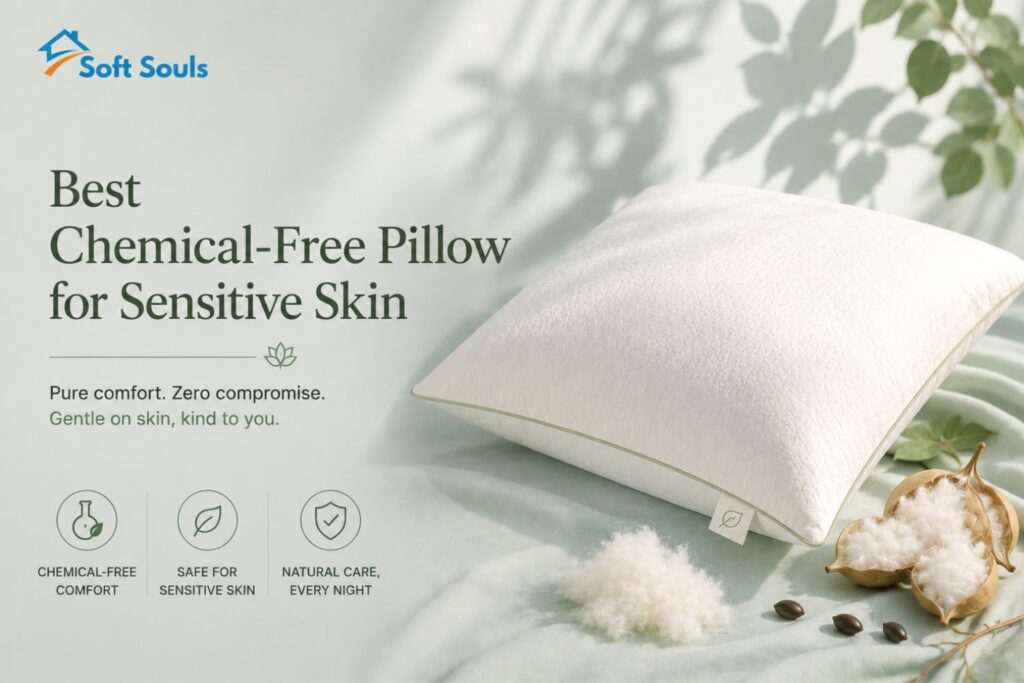
Best Chemical-Free Pillow for Sensitive Skin
Introduction
Skin irritation after sleep can be frustrating. Some people wake up with redness on their cheeks, an itchy feeling around the face, or general skin discomfort without knowing the reason. Could your pillow be irritating your skin?
The reality is that facial skin stays in contact with a pillow for several hours every night. If pillow materials trap heat, retain moisture, or contain certain chemical treatments, sensitive skin may become more uncomfortable over time.
This is why many sleepers are paying closer attention to the concept of a chemical-free pillow sensitive skin solution. Pillows made with natural materials and minimal chemical processing may provide a more comfortable sleeping environment while reducing unnecessary exposure to harsh bedding materials.
Why Can Some Pillows Irrate Sensitive Skin?
Not all pillows are made with the same materials or manufacturing processes.
Synthetic Fabrics
Some synthetic fabrics may trap heat and moisture close to the skin. This can create an uncomfortable sleeping environment, especially during warm weather.
Chemical Treatments
Certain pillows may undergo treatments for stain resistance, odor control, or manufacturing purposes. Sensitive individuals often prefer products with fewer added treatments.
Artificial Fragrances
Strong fragrances used during production or packaging may cause discomfort for some sleepers.
Heat and Sweat Buildup
When heat and moisture accumulate during sleep, skin may feel irritated or uncomfortable the next morning.
Dust Accumulation
Older pillows can collect dust and particles over time, making regular maintenance important for overall sleep hygiene.
What Is a Chemical-Free Pillow?
A chemical-free pillow generally refers to a pillow made with natural materials and limited chemical processing.
Natural Filling Materials
Common options include:
- Kapok
- Organic cotton
- Natural latex
- Wool
Minimal Chemical Processing
These pillows often focus on maintaining the natural characteristics of the materials used.
Skin-Friendly Bedding Choices
Many sleepers seeking a chemical-free pillow sensitive skin option prefer products that avoid unnecessary additives.
Breathable Construction
Natural materials frequently promote airflow, helping create a cooler and more comfortable sleeping environment.
Why Does Pillow Material Matter for Skin Health?
The pillow surface touches facial skin every night.
Continuous Skin Contact
Unlike many household products, pillows remain in direct contact with the face for several hours at a time.
Airflow and Moisture Control
A skin-friendly pillow material often supports better airflow and helps manage moisture buildup.
Reduced Irritation Risk
Breathable materials may help reduce discomfort associated with excessive heat and humidity.
Sleep Comfort
Comfort matters. A cooler, drier pillow surface often contributes to a more pleasant sleeping experience.
While pillow materials cannot prevent skin conditions, choosing suitable bedding may help create a more comfortable environment.
Which Natural Pillow Materials Are Suitable for Sensitive Skin?
Kapok
Kapok is lightweight, breathable, and naturally airy. It allows good airflow and is commonly used in natural bedding products.
Organic Cotton
Organic cotton is soft, breathable, and familiar to many consumers. It can provide comfortable moisture management during sleep.
Natural Latex
Natural latex offers support and durability while maintaining airflow through its open-cell structure.
Wool
Wool naturally helps regulate temperature and moisture. Some sleepers appreciate its year-round comfort benefits.
Each material has advantages and limitations. Personal comfort preferences remain an important factor when selecting a natural pillow for sensitive skin.
Chemical-Free Pillow vs Synthetic Pillow
| Feature | Chemical-Free Pillow | Synthetic Pillow |
| Breathability | Higher | Moderate |
| Skin Friendliness | Often Better | Varies |
| Moisture Control | Good | Moderate |
| Chemical Exposure | Lower | May Be Higher |
| Comfort | Natural Feel | Depends on Material |
| Durability | Material Dependent | Material Dependent |
What Features Should You Look for in a Pillow for Sensitive Skin?
When choosing a pillow, consider the following:
- Natural filling materials
- Breathable fabric covers
- Washable components when possible
- Minimal processing methods
- Hypoallergenic natural pillow features
- Moisture management capabilities
- Soft yet supportive construction
An organic pillow for skin health may be a practical option for people prioritizing natural bedding choices.
Who Benefits Most From Chemical-Free Pillows?
A chemical-free pillow may be suitable for:
People With Sensitive Skin
Those who experience occasional irritation may prefer bedding made from natural materials.
Allergy-Prone Sleepers
Natural materials and proper maintenance may contribute to a cleaner sleeping environment.
Children
Many parents prefer simplified bedding materials for younger family members.
Hot Sleepers
A breathable pillow can help improve comfort during warm nights.
Wellness-Focused Consumers
People seeking chemical-free bedding often value natural materials and sustainable choices.
How to Maintain a Chemical-Free Pillow?
Proper maintenance helps preserve comfort and cleanliness.
Regular Airing
- Air pillows regularly
- Avoid prolonged moisture exposure
Proper Cleaning
- Follow manufacturer instructions carefully
- Use gentle cleaning methods when recommended
Pillow Protectors
- Use breathable pillow protectors
- Wash covers regularly
Moisture Management
- Keep pillows dry
- Allow adequate ventilation
Replacement Schedule
- Replace pillows when they lose shape, comfort, or support
Why Softsoul Focuses on Natural Sleep Wellness
Softsoul’s approach centers on creating sleep products that emphasize natural comfort, breathability, and wellness. The brand focuses on materials that support airflow and encourage a comfortable sleeping environment.
Its philosophy aligns with growing consumer interest in sustainable and natural bedding solutions. By incorporating natural fibers into pillow designs, Softsoul aims to provide sleep products suited to modern comfort expectations while remaining mindful of environmental considerations.
The focus extends beyond simple comfort and includes creating bedding products that support everyday sleep wellness in different climate conditions, including warm and humid environments.
Conclusion
Pillow materials can have a significant influence on overall sleep comfort, especially for people with sensitive skin concerns. Because facial skin remains in contact with bedding for several hours each night, material choice matters.
A chemical-free pillow sensitive skin approach focuses on reducing unnecessary chemical exposure while prioritizing breathable natural materials. Options such as kapok, organic cotton, natural latex, and wool may provide a more comfortable sleeping environment.
While no pillow can solve every skin concern, choosing breathable and thoughtfully designed bedding can contribute to improved comfort, better moisture control, and a more pleasant sleep experience.
FAQ Section
What is a chemical-free pillow?
A chemical-free pillow is generally made with natural materials and minimal chemical processing. These pillows often use fillings such as kapok, organic cotton, wool, or natural latex instead of heavily processed synthetic materials. Many people seeking a chemical-free pillow sensitive skin option choose these products because they prefer bedding with fewer additives and a more natural construction.
Is a chemical-free pillow suitable for sensitive skin?
A chemical-free pillow may be a suitable choice for people with sensitive skin because it often focuses on natural materials and breathable construction. Better airflow and moisture management can contribute to a more comfortable sleeping environment. While individual reactions vary, many sleepers choose a natural pillow for sensitive skin to reduce exposure to certain synthetic materials and treatments.
Which pillow material is gentle on skin?
Several natural materials are commonly considered gentle on skin, including kapok, organic cotton, wool, and natural latex. The right choice depends on personal comfort preferences and support requirements. A skin-friendly pillow material should ideally provide airflow, moisture control, and comfort while minimizing unnecessary additives that some sleepers prefer to avoid.
Can pillow materials affect skin irritation?
Yes, pillow materials can influence overall skin comfort. Heat retention, moisture buildup, rough fabrics, and certain manufacturing treatments may contribute to discomfort for some individuals. Choosing breathable materials and maintaining proper pillow hygiene can help create a more comfortable sleeping environment. This is one reason why interest in chemical-free bedding continues to grow.
How often should a pillow for sensitive skin be replaced?
Most pillows should be replaced every one to two years depending on material quality, usage, and maintenance. A pillow that has lost its shape, accumulated excessive wear, or become difficult to keep clean may no longer provide the same level of comfort. Regular replacement can help maintain a fresher and more supportive sleeping environment.