
Introduction
Few things are more frustrating than trying to sleep on a hot and humid night. The room may be quiet, the bed may feel comfortable, yet sleep remains elusive. Many people wake up multiple times because their pillow feels warm, damp, or uncomfortable.
This happens because pillows often trap body heat and moisture throughout the night. As heat builds up around the head and neck, sleeping comfort decreases. Sweating can make the situation even worse, especially in warm climates like India.
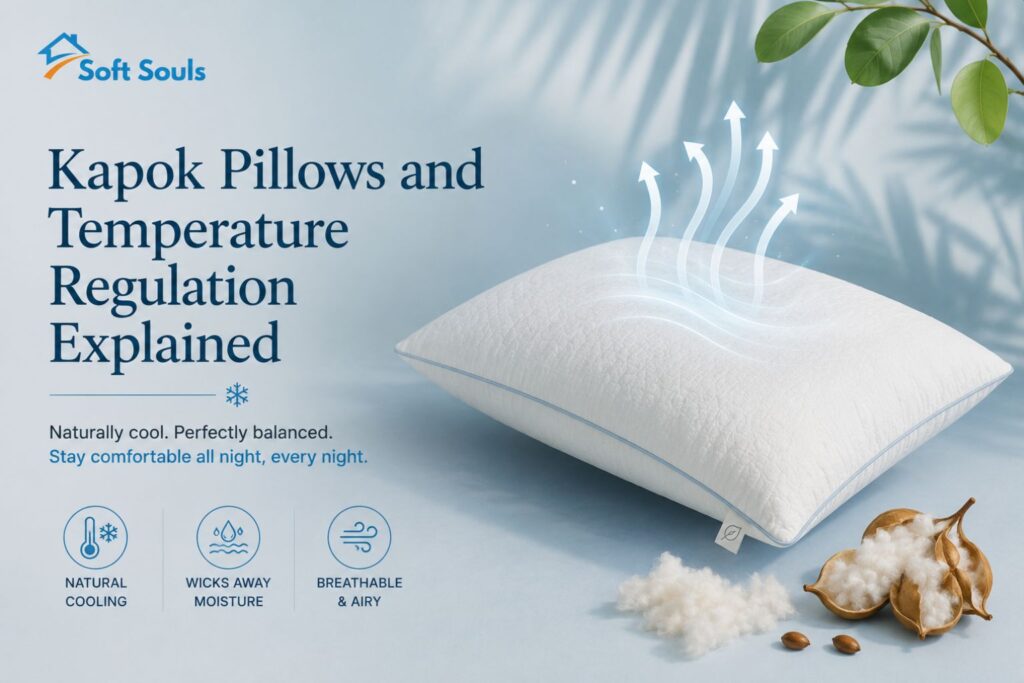
This is where kapok pillow temperature regulation becomes particularly important. Thanks to its naturally airy fiber structure, kapok helps improve airflow, reduce heat retention, and create a more comfortable sleeping environment.
Why Do Pillows Feel Hot During Sleep?
Many sleepers assume the room temperature is entirely responsible for sleep discomfort. However, pillows also play a major role.
Throughout the night, the body continuously releases heat. When a pillow cannot release that heat efficiently, warmth starts building up around the head and neck.
Limited airflow is another common issue. Dense pillow fillings often restrict air circulation, causing heat to remain trapped inside.
Humidity makes the situation worse. Moisture from sweat gets absorbed into the pillow surface, creating a warm and sticky feeling. Over time, this combination of heat retention and moisture buildup can significantly affect sleep quality.
What Is Kapok Fiber?
Where Kapok Comes From
Kapok is a natural fiber harvested from the seed pods of the kapok tree. These trees grow in tropical regions and produce lightweight fibers that have been used for generations.
Structure of Kapok Fiber
Kapok fibers are hollow and extremely lightweight. Each fiber contains tiny air pockets that contribute to its unique comfort characteristics.
Why It Is Used in Premium Pillows
Because of its softness, lightness, and airflow properties, kapok is commonly used in premium bedding products. Many sleepers appreciate the balance between comfort and breathability that kapok offers.
How Does Kapok Pillow Temperature Regulation Work?
The effectiveness of kapok pillow temperature regulation comes from the natural structure of the fiber itself.
Natural Air Pockets
Kapok fibers contain microscopic hollow spaces filled with air. These air pockets encourage airflow throughout the pillow.
Improved Airflow
Unlike dense synthetic materials, kapok allows air to move more freely. Better airflow helps reduce heat buildup around the head and neck.
Heat Dissipation
Heat generated during sleep can escape more easily through breathable kapok fibers. This creates a more balanced sleeping temperature.
Reduced Heat Retention
Many conventional pillows hold onto warmth throughout the night. Kapok helps minimize this problem by reducing heat accumulation.
Moisture Management
Kapok also supports moisture regulation by allowing humidity and sweat to disperse more efficiently. This makes it a practical choice for warm and humid climates.
Why Is Kapok Naturally Cooler Than Many Traditional Fillings?
Kapok is often compared with several popular pillow fillings.
Polyester
Polyester pillows are affordable but can retain more heat due to limited airflow. A breathable kapok pillow generally allows better ventilation.
Memory Foam
Memory foam provides support but is known for trapping body heat. Kapok typically feels lighter and cooler during extended sleep periods.
Cotton
Cotton is naturally breathable and comfortable. However, kapok’s hollow fiber structure often creates even greater airflow.
Down Alternatives
Many synthetic down alternatives focus on softness but may not provide the same level of ventilation as kapok.
For sleepers looking for a natural cooling pillow, kapok often offers a balanced combination of comfort and airflow.
How Kapok Helps With Night Sweating
Night sweating can make sleep uncomfortable and disruptive.
A pillow for night sweating should ideally support airflow and reduce moisture buildup. Kapok performs well in both areas.
For example, someone sleeping in Chennai, Mumbai, or Kolkata during peak summer may notice their pillow becoming warm after a few hours. A kapok cooling pillow can help by promoting air circulation and reducing heat accumulation around the head.
Better airflow often leads to a drier and more comfortable sleeping experience. While kapok will not eliminate sweating completely, it can help reduce the discomfort associated with excessive warmth.
Who Benefits Most From Kapok Pillows?
Kapok pillows can be especially useful for:
- Hot sleepers
- People living in humid regions
- Heavy sweaters
- Homes without air conditioning
- Side sleepers seeking comfort and airflow
- Daily comfort seekers looking for better sleep quality
Anyone struggling with heat retention during sleep may benefit from a temperature regulating pillow made with kapok fibers.
Regular Pillow vs Kapok Pillow
| Feature | Regular Pillow | Kapok Pillow |
| Breathability | Moderate | Excellent |
| Heat Retention | Higher | Lower |
| Airflow | Limited | Improved |
| Sweat Management | Basic | Better Moisture Control |
| Comfort | Varies | Soft and Airy |
| Sustainability | Depends on Material | Natural Fiber Based |
What Should You Look For When Buying a Kapok Pillow?
Fill Quality
- Look for high-quality natural kapok filling
- Avoid excessively compressed fillings
Pillow Loft
- Choose loft based on sleeping position
- Side sleepers may prefer higher loft options
Cover Material
- Cotton covers usually improve breathability
- Natural fabrics often complement kapok well
Breathability
- Ensure the pillow design promotes airflow
- Check product specifications carefully
Maintenance Requirements
- Follow cleaning instructions provided by the manufacturer
- Maintain pillow freshness through regular airing
Common Myths About Cooling Pillows
Cooling Pillows Feel Cold All Night
Cooling pillows do not create cold temperatures. They simply help manage heat more effectively.
Cooling Pillows Stop Sweating Completely
No pillow can completely prevent sweating. However, a kapok cooling pillow may help reduce heat-related discomfort.
All Natural Pillows Regulate Temperature Equally
Different natural materials perform differently. Kapok’s hollow fiber structure provides unique airflow advantages compared to many other fillings.
Why Softsoul Focuses on Breathable Natural Sleep Products
Softsoul emphasizes natural sleep solutions designed to improve comfort and overall sleep wellness. The brand focuses on materials that support airflow, breathability, and long-term sleeping comfort.
Its approach centers around sustainable bedding choices that align with modern wellness preferences. By incorporating breathable natural materials into product design, Softsoul aims to address common sleep challenges associated with heat and humidity.
This focus makes natural sleep products particularly relevant for Indian climate conditions, where temperature management and airflow play an important role in nightly comfort.
Conclusion
Heat retention can have a significant impact on sleep quality, particularly in warm and humid climates. Pillows that trap warmth often contribute to discomfort, sweating, and interrupted sleep.
The strength of kapok pillow temperature regulation lies in the fiber’s naturally hollow structure, which promotes airflow and helps dissipate heat. Combined with moisture management and breathability, kapok offers several advantages for sleepers seeking greater comfort.
For those looking for a natural cooling pillow, kapok provides a practical solution that balances softness, airflow, and everyday comfort.
FAQ Section
What makes kapok pillows breathable?
Kapok pillows are breathable because the fibers contain natural hollow spaces that allow air to circulate throughout the pillow. This airflow helps reduce heat buildup and supports moisture management during sleep. A breathable kapok pillow can feel more comfortable during warm nights because it allows heat to escape instead of trapping it around the head and neck.
How does kapok pillow temperature regulation work?
Kapok pillow temperature regulation works through the fiber’s lightweight and hollow structure. These natural air pockets promote airflow and help dissipate body heat. Instead of retaining warmth, the pillow allows heat to move away from the sleeping surface. This creates a cooler and more comfortable sleep environment, especially during hot and humid conditions.
Are kapok pillows suitable for Indian summers?
Yes, kapok pillows are often well suited for Indian summers because they support airflow and reduce heat retention. The breathable nature of kapok fibers helps manage warmth and moisture during hot nights. Many sleepers choose a kapok cooling pillow because it can provide better comfort in regions where humidity and high temperatures are common.
Can kapok pillows help with night sweating?
Kapok pillows can help reduce the discomfort associated with night sweating by improving airflow and reducing heat buildup. While they do not stop sweating entirely, they help create a cooler sleeping surface. A good pillow for night sweating can make a noticeable difference by allowing moisture and heat to dissipate more efficiently.
Are kapok pillows cooler than polyester pillows?
In many cases, yes. Kapok fibers generally allow more airflow than polyester fillings, which can sometimes trap heat. A natural cooling pillow made with kapok often feels lighter and more breathable during sleep. However, comfort can also depend on pillow construction, cover material, and personal sleeping preferences.