

Sleep Guides
How to Choose Pillow Height and Firmness for Your Sleeping Position
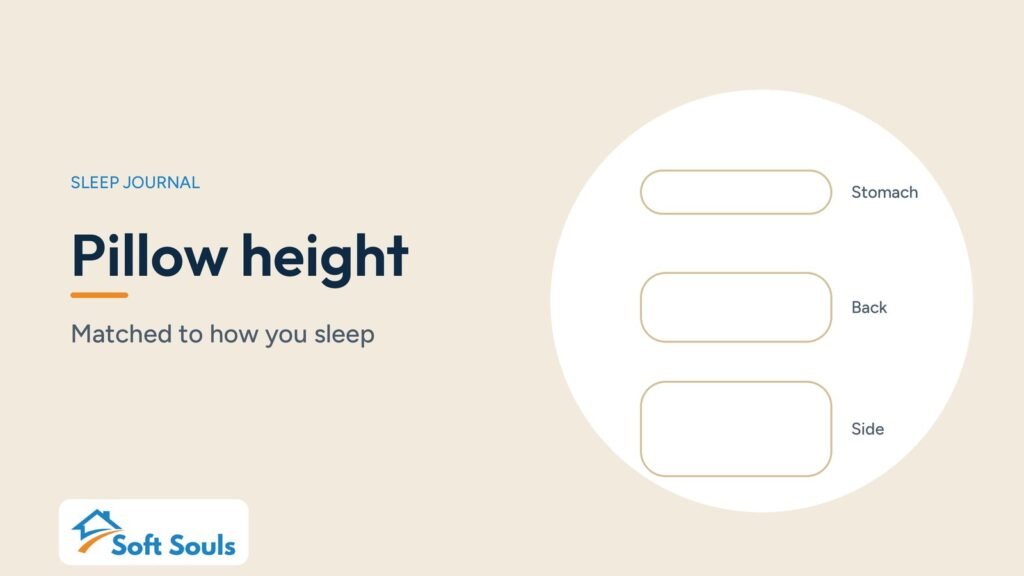
Ask ten people what makes a good pillow and you will get ten answers, but most of the difference comes down to one thing: how you sleep. The goal is simple to describe. When you lie down, your head and neck should rest roughly in line with the rest of your spine, without being pushed up or allowed to drop. The pillow’s job is to fill the gap that makes that possible.
A note before we start: this is general comfort guidance, not medical advice. If you have ongoing neck, shoulder or back pain, numbness or headaches, please see a doctor or physiotherapist. No pillow, ours included, is a treatment.
Side sleepers: more height, steady support
Lying on your side leaves the biggest gap, between the mattress and your head, roughly the width of your shoulder. A pillow that is too low lets your head tilt down; too high pushes it up.
- Look for: a fuller, medium-firm pillow that does not collapse under your head.
- Fillings that suit: kapok, which you can push into a fuller shape, or a well-fluffed cotton pillow.
- Tip: broad-shouldered people usually need more height than narrow-shouldered people. A large 18 x 28 inch kapok pillow gives more fill to work with.
Back sleepers: medium height
On your back, the gap behind your neck is smaller. Too high a pillow pushes your chin towards your chest.
- Look for: medium height and medium firmness, ideally with a little more support under the neck than under the head.
- Fillings that suit: kapok, because you can push more fill towards the neck end, or a cotton pillow once it has settled a little.
Stomach sleepers: low and soft
Lying on your front turns your head to one side. A tall pillow bends your neck back.
- Look for: a low, soft pillow, or a very thin one.
- Fillings that suit: a softer cotton or hollow fibre pillow, or a kapok pillow with some fill flattened out.
Combination sleepers
If you turn through the night, you need a pillow that works in more than one position. A shapeable fill is useful: kapok and fibre move as you do, while foam holds one fixed shape. Some people keep a fuller side and a flatter side by pushing the fill to one end.
Children
Children need a smaller, lower pillow than adults; an adult pillow can push a small child’s head too far forward. Our kids pillows are smaller (12 x 18 inches) and lower. Follow your paediatrician’s advice on when a young child should start using a pillow at all.
A simple check at home
- Lie in your usual position on your usual mattress.
- Ask someone to look at you from the side (or from behind, if you sleep on your side).
- Your nose should line up roughly with the middle of your chest, and your neck should look neither bent up nor dropped down.
- Adjust: add or move fill, fold a towel under a low pillow to test height, or try a different pillow.
Your mattress matters too. A soft mattress lets your shoulder sink, so you may need a slightly lower pillow; on a firm mattress or a floor quilt mattress, you may need a slightly higher one.
Firmness is personal
Two people of the same build in the same position can prefer very different firmness. Treat these as starting points, then trust how you feel after a week. Each Soft Souls product page lists the pillow’s feel and who it is suited to, based on the product’s actual fill and size.
The short version
Side sleepers need the most height and a steady fill, back sleepers need medium height, stomach sleepers need a low, soft pillow, and combination sleepers benefit from a shapeable fill. Check your alignment at home, and see a professional if you have pain. For how each filling behaves, read our pillow filling guide.
Written by the Soft Souls team and last reviewed in November 2026. We sell kapok, cotton, hollow fibre and satin bedding, so we have an interest in this topic; we have tried to say plainly where another option may suit you better. This article is general guidance, not medical advice.