

Sleep Guides
Kapok, Cotton, Hollow Fibre or Foam? How to Choose a Pillow Filling
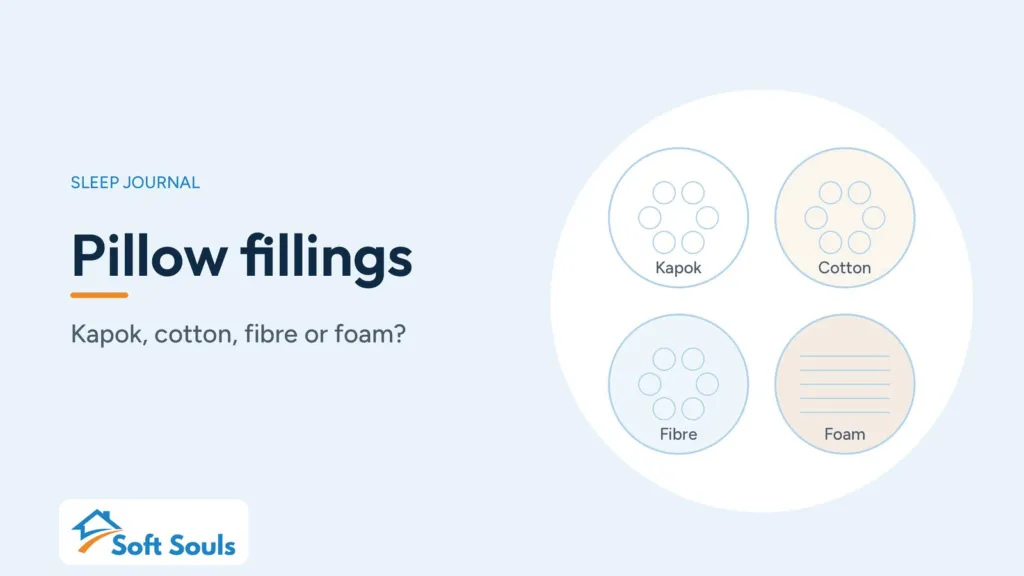
The cover is what you see, but the filling is what you sleep on. It decides how soft or firm the pillow feels, how it changes over the months, whether you can wash it and how warm it feels on a humid night. Here is a plain comparison of the fillings you will meet most often in India.
The quick comparison
| Filling | Feel | Weight | Washable? | Needs |
|---|---|---|---|---|
| Kapok (Ilavam Panju) | Springy, medium-firm, shapeable | Light | No, wash the cover | Regular fluffing and airing |
| Cotton | Soft at first, firms up as it settles | Heavier | No, wash the cover | Fluffing and airing |
| Hollow polyester fibre | Soft, bouncy | Light | Usually yes, on gentle | Fluffing; loses loft over time |
| Memory foam | Slow, moulding, fixed shape | Medium | No, wash the cover | Little; can feel warm |
| Buckwheat hulls | Firm, crunchy, very adjustable | Heavy | No, wash the cover | Occasional topping up |
Kapok (Ilavam Panju)
Kapok is the light, hollow fibre from the pods of the kapok or silk cotton tree. It makes a pillow that springs back when you press it and can be pushed into shape. It is lighter than cotton and its natural waxy coating means it does not take up water quickly. It cannot be washed, so it lives inside a removable cover, and it needs a shake every few days to stay even. Read our full guide to Ilavam Panju for more.
Choose it if you want a light, lively pillow you can shape, and you are happy to fluff it.
Cotton
Traditional cotton filling (panju) feels soft and cosy when new. Over time it packs down and becomes denser and firmer, which some people like and others do not. Cotton absorbs moisture readily, so airing it in the shade matters, especially in humid places. Like kapok, it should not be washed.
Choose it if you like a soft, substantial pillow and do not mind it firming up with use. See our cotton pillows.
Hollow polyester fibre
This is the filling in most “hotel style” and budget pillows: polyester fibres with a hollow core that traps air and gives bounce. Its big advantage is washing. Our hollow fibre pillows can go in the machine on a gentle cycle, as long as they are dried completely afterwards. Its drawback is that it gradually loses loft and flattens, and being synthetic, it is not the choice for people who want a plant-based fill.
Choose it if easy washing matters most to you.
Memory foam
Memory foam softens with warmth and moulds closely to your head and neck, then slowly returns to shape. Some people love the steady support. Others find it feels warm, because it hugs closely and has less air moving through it than loose fibre, and some notice a smell when it is new. It holds a fixed shape, so you cannot adjust it much. We do not sell foam pillows.
Buckwheat hulls
Buckwheat pillows are filled with the husks of buckwheat seeds. They are firm, heavy, rustle when you move, and can be adjusted precisely by adding or removing hulls. They are popular in Japan and Korea and less common in India. We do not sell them; they are worth considering if you want a very firm, very adjustable pillow and do not mind the sound.
Natural or synthetic: what actually differs
“Natural” fillings such as kapok and cotton are plant fibres. “Synthetic” ones such as polyester fibre and foam are made from petroleum-based materials. In daily life, the differences that matter are practical:
- Washing: synthetic fibre usually washes; natural fills usually do not.
- Feel over time: natural fills settle and can be fluffed back; fibre loses loft; foam keeps its shape until it breaks down.
- Air: loose fills let more air move through than solid foam.
- End of life: plant fibres are biodegradable; synthetics are not.
We sell both natural fills and a washable fibre option because people need different things. We would rather you choose the right one than the one we happen to prefer.
How to decide
Ask yourself three questions:
- Must I be able to wash the whole pillow? If yes, choose hollow fibre.
- Do I want to adjust the shape? If yes, choose kapok (or buckwheat).
- Do I like a soft pillow that firms up, or a springy one that stays lively? Soft and firming: cotton. Springy: kapok.
Your sleeping position matters too: side sleepers usually need more height than stomach sleepers. Our guide to pillow height and firmness for your sleeping position covers this.
The short version
There is no single best filling. Kapok is light and springy, cotton is soft and grows firmer, hollow fibre washes easily, foam holds a fixed shape and buckwheat is firm and adjustable. Pick the one whose drawbacks you can live with. Browse all our pillows by filling, and check each product’s Material Passport for its exact fill, fabric, size and weight.
Written by the Soft Souls team and last reviewed in November 2026. We sell kapok, cotton, hollow fibre and satin bedding, so we have an interest in this topic; we have tried to say plainly where another option may suit you better. This article is general guidance, not medical advice.
2 comments