Introduction
When Sleep Becomes a Sweaty Battle?
Indian summers are relentless. Even after the sun goes down, the heat stays. You lie down, the ceiling fan is spinning, and somehow your pillow already feels warm before you have even fallen asleep. An hour later, you are flipping it over for the cooler side. Two hours later, that side is warm too.
A large part of this discomfort comes from the pillow filling itself. Most standard pillows sold today are stuffed with synthetic polyester or foam materials that hold heat close to your head instead of letting it escape. For people sleeping in non-AC rooms across India, this makes warm nights feel even harder to get through.
This is where natural sleep materials like Illavam Panju become relevant. It is not a modern invention. It has been used in Indian homes for generations and there are good reasons why.
This complete guide to natural sleep explores what Illavam Panju is, why it breathes better, and how choosing a kapok pillow can genuinely improve your sleep comfort during hot and humid weather.
What is Illavam Panju?
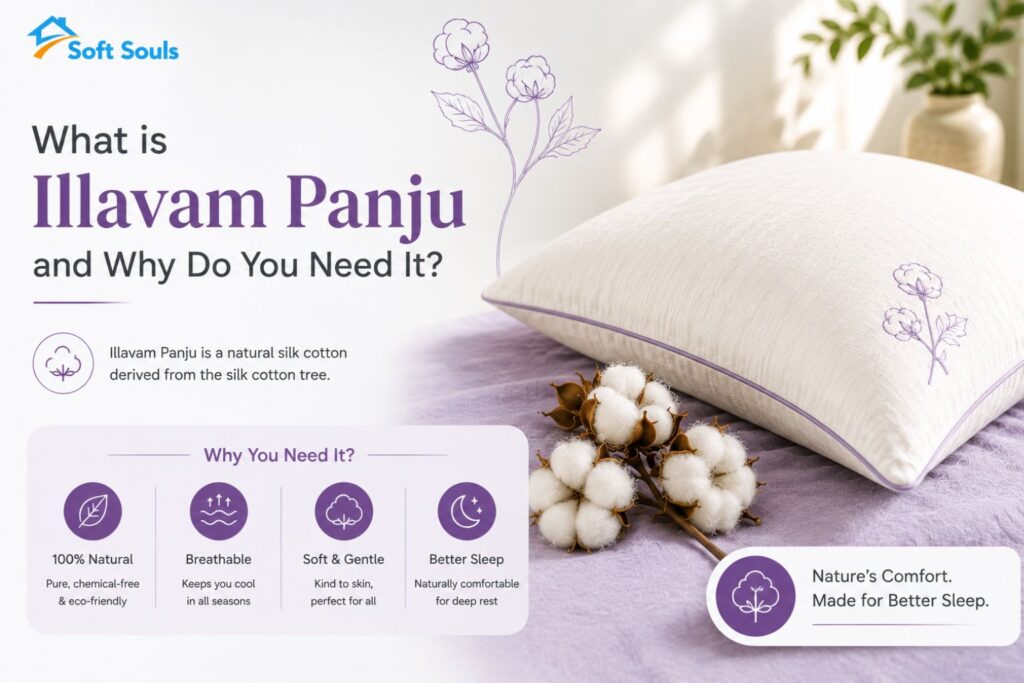
Illavam Panju is the Tamil name for Kapok a soft, fluffy, plant-based fibre harvested from the seed pods of the Ceiba tree. This tree grows naturally in tropical regions, including parts of India and Southeast Asia.
The fibre looks a lot like cotton but feels even lighter. When you hold a handful of Illavam Panju, it almost floats. It has a naturally silky texture and an airy, open structure that makes it quite different from anything synthetic.
In Indian households, particularly in Tamil Nadu and other southern states, Illavam Panju pillows were a common part of traditional bedding for decades. Grandmothers would stuff pillows and mattresses with it, and families would air these out in the sun regularly. It was simply a part of how people slept naturally, without thinking too much about it.
What makes Illavam Panju worth revisiting today is that its natural properties hold up well against much of what modern synthetic filling offers, especially when it comes to breathability and lightweight comfort.
Why Do Natural Pillows Feel Cooler?
This is worth understanding properly, even in simple terms.
When you sleep, your body releases heat through your head and neck. A dense pillow like one made from memory foam or tightly packed polyester absorbs that heat and holds it near you. There is very little air movement happening inside. The pillow essentially becomes a warm surface that keeps reflecting your own body heat back at you.
Natural sleep materials work differently. Here is why:
- Airflow Natural fibres like kapok have a hollow, open structure. Air can move through the filling rather than being blocked by dense material. This constant circulation prevents heat from sitting in one spot.
- Moisture handling Kapok fibres are naturally moisture-resistant. Sweat and humidity do not cling to the fibre. They pass through or evaporate instead of building up inside the pillow.
- Lightweight filling A lighter filling creates less pressure around your head and neck. Less pressure means better circulation and a cooler, more comfortable sleeping experience.
- No synthetic heat retention Synthetic foam and polyester have a chemical structure that traps thermal energy. Natural fibres simply do not work that way.
Essentially, the physics of natural fibres is just more compatible with warm-weather sleeping.
How Does Illavam Panju Help During Hot Weather?
For anyone sleeping in a hot, humid room with or without AC an Illavam Panju pillow offers a noticeably different experience.
The fibre’s hollow structure allows constant airflow through the pillow. So even when the room is warm, the pillow surface does not build up the same trapped heat that a foam or polyester pillow would. It stays relatively cooler because air is always moving inside it.
Illavam Panju tips that make a practical difference:
- Fluff the pillow daily to keep the filling airy and open
- Air it out in sunlight every few weeks to refresh the fibre
- Use a breathable cotton pillowcase to enhance the natural airflow further
- Avoid pressing the pillow flat under heavy blankets during warm months
As a cool pillow for sweating at night, Illavam Panju is particularly helpful because moisture does not accumulate the way it does in synthetic filling. Sweat moves away from the surface rather than sitting inside the pillow.
For people who wake up with a damp or warm pillow this single change in material can make nights noticeably more comfortable.
What Makes Kapok Pillows Different?
A kapok pillow is not like most pillows you will find at a general home goods store. The filling has a distinctly different character.
Where polyester filling feels dense and springy, kapok feels light and airy almost like sleeping on something that barely weighs anything. It moulds softly around your head without creating pressure points. And because the fibre is plant-based and unprocessed, there are no chemical residues or synthetic coatings involved.
What sets a kapok pillow apart:
- Naturally lightweight — Considerably lighter than polyester or foam alternatives
- Airy texture — Does not compact tightly, so air keeps moving through it
- Breathable by nature — No synthetic materials blocking airflow
- Traditional comfort — Has been used as a traditional cotton pillow India families trusted long before modern foam pillows arrived
- Chemical-free — No VOCs, no flame retardants, no synthetic binders
- Adjustable in some designs — The filling can be added or removed to adjust firmness
Compared to foam pillows, kapok does not trap heat. Compared to polyester, it does not hold moisture. For a natural pillow for hot weather, the combination of those two qualities is meaningful.
Kapok Pillow vs Synthetic Pillow — Comparison
| Feature | Kapok / Illavam Panju Pillow | Regular Synthetic Pillow |
| Breathability | Excellent — open fibre allows constant airflow | Poor — dense material limits air movement |
| Heat Retention | Low — heat escapes through the airy filling | High — traps body heat near head and neck |
| Weight | Very lightweight and easy to handle | Heavier, especially foam variants |
| Sweat Comfort | Moisture-resistant fibre stays drier | Holds moisture, feels damp over time |
| Air Circulation | Natural hollow fibre promotes ventilation | Limited circulation through synthetic fill |
| Comfort in Humid Weather | Noticeably more comfortable in warm, humid rooms | Can feel stuffy and warm quickly |
| Chemical Exposure | Plant-based, no processing chemicals | May contain VOCs, flame retardants, binders |
| Maintenance | Fluff daily, sun-air periodically | Machine washable but loses shape faster |
Benefits of Using Illavam Panju Pillows
There is a reason this fibre stayed in Indian homes for generations. The practical benefits are real and specific.
Improved Airflow
The hollow fibre structure keeps air circulating inside the pillow. This is the main reason a breathable pillow India users rely on for warm weather is often made from Illavam Panju.
Softer Sleeping Feel
The silky texture of kapok fibre is gentler against skin than synthetic materials. It does not feel rough or plasticky over time.
Lightweight Comfort
A kapok pillow weighs noticeably less than foam or dense polyester alternatives. For people who toss and turn or reposition frequently at night, this makes a practical difference.
Better Comfort During Indian Summers
Whether it is Chennai in May, Pune in April, or Hyderabad in June the heat is real. A pillow that does not add to the thermal discomfort helps in a straightforward, practical way.
Reduced Sweating Discomfort
Because the fibre naturally resists moisture retention, the pillow surface stays relatively drier. This is one of the more consistently noticed benefits for people who sweat during sleep.
Natural Sleeping Experience
There are no synthetic coatings, no chemical smells, and no artificial processing involved. For natural sleep materials, Illavam Panju is as clean and simple as it gets.
How to Choose an Illavam Panju Pillow in India?
Not every pillow labelled “kapok” or “Illavam Panju” is the same. A few things are worth checking.
1. Filling Purity
Look for 100% pure kapok filling. Some products mix kapok with polyester to reduce cost, which reduces breathability. Ask or check product details before buying.
2. Pillow Cover Material
The outer fabric matters as much as the filling. A breathable organic cotton cover works well with Illavam Panju filling. A synthetic cover can undo the breathability benefits of the natural filling inside.
3. Pillow Firmness
Kapok pillows tend to be on the softer side. If you prefer more support especially for side sleeping check whether the pillow allows filling to be adjusted. Some brands offer this.
4. Washability
In India’s dusty climate, regular cleaning is important. Check that the cover is removable and machine washable. The inner filling usually needs spot cleaning or periodic sun-airing rather than full machine washing.
5. Pillow Size and Weight
Standard sizes work for most adults. For children, smaller and lighter variants are available. Always check the weight and loft height if you have specific neck support needs.
6. Brand Transparency
A reliable seller will clearly state the filling material, cover fabric, and care instructions. Vague product descriptions or unclear material sourcing are worth being cautious about.
Soft Souls Natural Sleep the Indian Way
When looking for a genuine Illavam Panju pillow in India, Soft Souls (softsouls.in) is a brand worth knowing about.
Soft Souls handcrafts their pillows using 100% organic Illavam Panju (Kapok silk cotton) filling, wrapped in breathable cotton fabric. The brand was built around the idea that sleep is a daily ritual that deserves natural, honest materials not synthetic shortcuts.
Each pillow is created by Indian artisans, blending traditional craftsmanship with practical everyday comfort. The filling is plant-based, chemical-free, and sourced with care for quality.
The airy structure of the kapok filling allows continuous airflow, helping reduce heat and moisture build-up during sleep making it comfortable in all seasons, especially in warm or humid climates.
Soft Souls also offers a kids pillow range filled with natural Kapok, designed to provide gentle, balanced support while staying soft and breathable for a peaceful night’s sleep suitable for warm climates and daily use.
For Indian families looking for a traditional cotton pillow India trusted for generations, made with clean materials and designed for the realities of Indian weather, Soft Souls is a practical and transparent option.
Conclusion
Illavam Panju is not a trend. It is a material that Indian families used for decades before synthetic pillows took over and the reasons people are returning to it are simple and practical.
Better airflow. Lighter weight. Less heat retention. Reduced sweating discomfort. No chemical exposure.
For anyone dealing with warm, humid nights whether in Chennai, Mumbai, Hyderabad, or anywhere else in India switching to a kapok pillow is one of the more sensible adjustments you can make for sleep comfort.
The improvement will not be dramatic on night one. But over a few weeks of consistently cooler, drier, more comfortable sleep, the difference becomes noticeable. And once you have slept on a genuinely breathable pillow India weather cannot defeat it is hard to go back.
FAQ
What is Illavam Panju?
Illavam Panju is the Tamil name for Kapok a natural plant-based fibre harvested from the seed pods of the Ceiba tree. It has a hollow, fluffy structure that makes it incredibly lightweight and airy. As one of India’s most trusted traditional cotton pillow India fillings, it has been used in homes for generations. Unlike synthetic materials, it is completely chemical-free, breathable, and gentle on skin a clean, natural choice for everyday sleep comfort.
Is a Kapok pillow suitable for Indian weather?
Yes, a kapok pillow is well-suited to Indian weather. The hollow fibre structure allows constant air movement inside the pillow, preventing heat from building up. For hot, humid rooms without strong air conditioning, this makes a real difference. As a breathable pillow India sleepers can rely on through summer, kapok outperforms dense synthetic options. It also handles moisture better than polyester, so the pillow surface stays relatively drier through the night.
Why do natural pillows feel cooler?
Natural sleep materials like Illavam Panju have an open fibre structure that allows air to circulate freely. Synthetic materials especially foam and polyester are dense and block airflow, trapping body heat near your head. Natural fibres do not work that way. Air keeps moving, heat escapes, and moisture does not accumulate. That is why a natural pillow for hot weather consistently feels cooler than a synthetic one, even in the same room at the same temperature.
How does Illavam Panju help reduce sweating during sleep?
A good illavam panju pillow helps with sweating in two ways. First, the airy filling allows heat to escape rather than building up so the pillow stays cooler to begin with. Second, kapok fibre is naturally moisture-resistant, meaning sweat does not cling to the filling. It passes through or evaporates instead of sitting inside the pillow. Following basic illavam panju tips like daily fluffing and periodic sun-airing keeps the fibre fresh and its natural properties working well.
How to choose an Illavam Panju pillow?
Start by confirming the filling is 100% pure kapok not a blend with polyester. Check that the cover is made from breathable cotton fabric rather than a synthetic material. For a complete guide natural sleep experience, the cover and filling should both be natural. Consider firmness based on your sleep position, and check whether the filling is adjustable. Make sure the cover is removable and washable. Buy from a brand that clearly states its materials transparency about what is inside the pillow matters.