Introduction
Most people put a lot of thought into what goes into their bodies the food, the water, the air. But what the body rests on for seven to eight hours every night? That part often gets skipped.
Conventional bedding mattresses, bed frames, quilts, and sheets made with synthetic materials and chemical treatments can introduce a quiet but consistent layer of irritants into the sleep environment. Heat retention, off-gassing from foam materials, chemical finishes on fabric, and poor airflow all add up over time. For anyone dealing with skin irritation, restless nights, or just waking up feeling less rested than expected, the bedroom setup is worth examining.
This complete guide to toxin-free bedroom living is not about a dramatic overhaul. It is about understanding what organic bedding actually offers, which products matter most, and how to make practical choices suited to India’s climate. From cotton beds to natural quilts, here is what to know.
What Is Organic Bedding and Why Does It Matter?
Organic bedding tips always start here understanding what “organic” actually means in a bedding context.
Organic bedding refers to sleep products made from natural, minimally processed materials cotton grown without synthetic pesticides, wood frames without chemical treatments, quilts filled with natural fibres rather than synthetic polyester. The key difference from conventional bedding is what is not in the product: residual chemicals from industrial processing, synthetic coatings, or materials that off-gas compounds over time.
Why does this matter?
- Long skin exposure — bedding is in contact with the body for several hours every night. Even low-level irritants accumulate with daily exposure.
- Indoor air quality — foam mattresses and synthetic quilts can release volatile organic compounds (VOCs) into the bedroom, especially when new. A complete guide toxin-free bedroom approach reduces this considerably.
- Heat and comfort — organic materials, particularly cotton, tend to be more breathable than synthetic alternatives, which directly affects sleep quality in Indian weather.
- Skin health — people with eczema, acne-prone skin, or general skin sensitivity often notice improvement when switching to natural, chemical-free sleep surfaces.
Organic bedding is not a luxury category for most of these reasons. It is a practical response to a sleep environment problem.
Why Does a Toxin-Free Bedroom Actually Affect Sleep?
This is a fair question. Why would the chemical composition of a mattress or quilt change how sleep feels?
The answer is layered. During sleep, the body’s temperature drops slightly, pores open, and the immune system is more actively working. A bedroom filled with synthetic materials foam off-gassing, chemically finished fabrics, synthetic pillow filling creates a subtle but real background stress on the body.
Practically speaking, here is what changes in a complete guide toxin-free bedroom setup:
- Reduced skin irritation — natural cotton fibres do not carry the chemical finishes that conventional bedding does. This reduces contact dermatitis and overnight breakouts.
- Better airflow — conventional foam mattresses and synthetic bedding trap heat. Natural materials breathe, which lowers body temperature during sleep.
- Fewer allergens — synthetic materials accumulate dust mites and bacteria more readily than natural alternatives. Cotton, being naturally breathable, stays drier and less hospitable to allergens.
- Less chemical odour — new conventional mattresses and bedding often have a distinct smell that fades over weeks. Natural materials do not produce this.
For Indian homes — where summer nights can be warm and humid even indoors the breathability advantage of organic materials is especially relevant.
What Makes Cotton Beds a Healthier Sleeping Surface?
A cotton bed referring here to wooden bed frames with cotton-based or natural mattress support, rather than foam or chemically treated alternatives is among the cleaner sleeping surfaces available.
Here is why cotton beds make practical sense:
No Synthetic Foam Off-Gassing
Most conventional mattresses use polyurethane foam, which can release VOCs as it ages. Organic bedding tips consistently recommend moving away from this for anyone sensitive to chemical odours or indoor air quality concerns.
Natural Material Compatibility
Cotton and natural wood work well together. Wood bed frames without chemical stain treatments create a genuinely clean sleeping surface no synthetic adhesives, no formaldehyde in composite wood panels, no chemical finishes.
Breathable Base for Better Sleep
A solid, natural sleeping base improves airflow under the mattress. This matters in India’s climate, where an enclosed, poorly ventilated sleeping setup creates warmth and humidity that disrupts sleep.
Durability Without Chemical Dependency
Well-made wooden beds with cotton or natural support layers last for years without needing replacement or re-treatment with chemical products. They are also simpler to clean and maintain.
For anyone starting the complete guide toxin-free bedroom process, the bed frame and sleeping surface are the foundation worth getting right first.
Are Organic Cotton Quilts Worth It for Indian Weather?
This is where Indian context matters a lot.
Many Indian households already use thin cotton quilts called dohars during summer months, and heavier versions during mild winters. The logic is sound: cotton breathes, releases moisture, and does not trap heat the way synthetic quilts do.
Organic cotton quilts take this further. Standard cotton quilts may still be treated with chemical softeners, dyes, or finishing agents. Organic versions use natural dyes and avoid synthetic treatments, creating a quilt that is both breathable and genuinely free of chemical residues.
Practical reasons to consider organic cotton quilts:
- Ideal for humid nights — the natural moisture-wicking property of cotton keeps the sleep surface drier through the night
- Lightweight without being cold — cotton quilts can be layered for winter or used single in summer; they regulate without retaining heat
- Skin-friendly surface — no chemical finish means the quilt surface stays gentle on skin, even with nightly contact
- Suitable for children and sensitive skin — a natural, chemical-free quilt is one of the safer bedding choices for young children or anyone with skin sensitivity
- Easy maintenance — cotton quilts wash well without losing their structure or softness, an important practical advantage
For homes without AC or with AC that does not fully overcome humid monsoon nights an organic cotton quilt is a genuinely sensible everyday choice.
Organic Bedding vs Conventional Bedding
| Feature | Organic Bedding | Conventional Bedding |
| Chemical Exposure | Minimal natural materials, fewer treatments | Higher synthetic finishes, chemical dyes |
| Breathability | High natural fibres allow airflow | Variable synthetics often trap heat |
| Heat Retention | Low suits warm Indian nights | Higher foam and synthetic fills retain warmth |
| Skin Comfort | Gentle, natural surface contact | Can cause irritation over time |
| Moisture Handling | Absorbs and releases naturally | Traps moisture in synthetic fills |
| Indoor Air Quality | No off-gassing from natural materials | Foam/synthetic products can off-gas VOCs |
| Durability | Long-lasting with simple care | Degrades faster; synthetic fills compress |
| Environmental Impact | Lower natural, biodegradable materials | Higher synthetic waste and chemical processing |
The differences across these categories are not dramatic in any single night. But they compound meaningfully over months and years of daily sleep.
Organic Bedding Tips for Building a Healthier Bedroom
Here are practical organic bedding tips for Indian homes, without requiring everything to change at once:
Start with the pillow The pillow has the most direct skin contact face, neck, and ears rest on it for hours. A natural cotton or Kapok pillow is one of the most impactful changes for skin comfort and breathability.
Switch the top layer next Replace a synthetic quilt with a cotton one. This changes the immediate sleep surface feel and reduces heat retention noticeably.
Check the bed frame If upgrading the bed frame, look for solid wood options without chemical treatments. Avoid composite or MDF frames treated with synthetic adhesives.
Wash new organic bedding before first use Natural products may still carry manufacturing residues. A wash before first use removes these and softens the fabric.
Layer instead of replacing In winter, layer a thinner organic cotton quilt over a natural mattress rather than switching to a heavy synthetic alternative. This keeps the breathable quality year-round.
Air bedding regularly Natural cotton and wood products benefit from regular airing. Sunlight helps keep natural fibres fresh and reduces moisture buildup particularly relevant in India’s monsoon months.
How to Choose Organic Bedding in India?
A few practical checks before buying:
1. Verify the fill material For quilts and pillows, the filling matters as much as the outer fabric. Look for 100% cotton, Kapok, or other natural fillings. Avoid vague “natural blend” descriptions.
2. Check for chemical-free claims Genuine organic products will specify what is not used no synthetic dyes, no chemical softeners, no foam components. If the listing is vague, ask or move on.
3. Prioritise breathability for Indian climate A bedding product that performs in temperate European weather may not suit a Chennai or Mumbai summer. Look for products specifically described as breathable and moisture-absorbent.
4. Consider washability Natural cotton bedding should be machine washable without losing softness. Confirm care instructions before buying.
5. Match to skin sensitivity For sensitive, eczema-prone, or acne-prone skin, the absence of chemical treatments in the fabric is the most important factor. A smooth, closely woven cotton surface is preferable.
6. Assess the bed frame separately If replacing the entire sleep setup, start with a solid wood bed frame. Avoid pressed wood or MDF options that use chemical adhesives.
Soft Souls: Organic Bedding Made for Indian Homes
For those looking to build a complete guide toxin-free bedroom setup with products made for Indian conditions, Soft Souls offers a practical range worth considering.
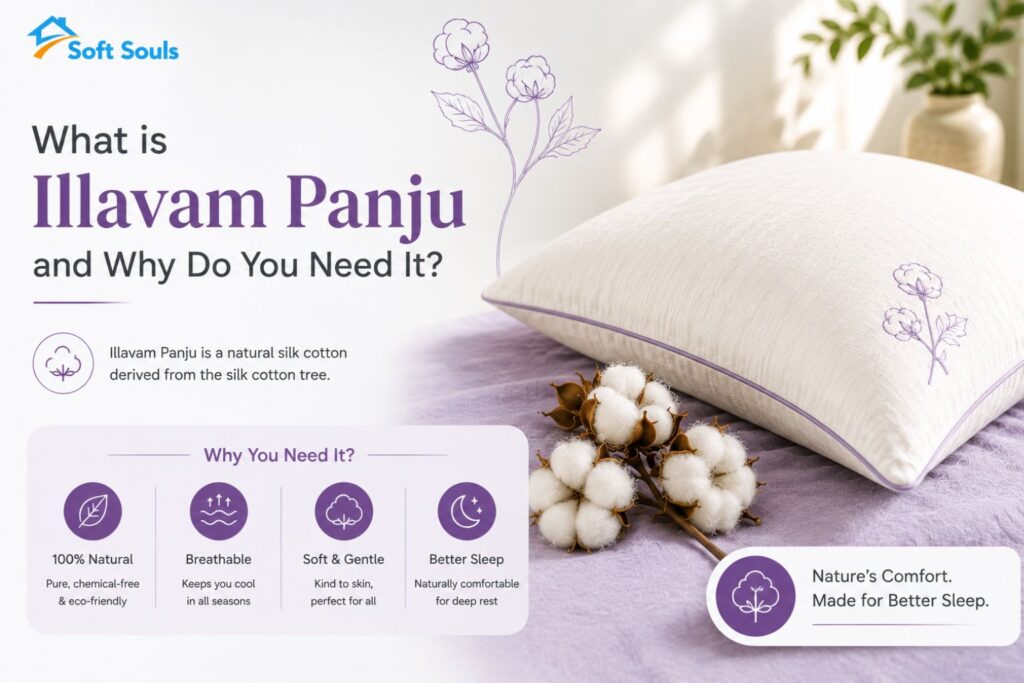
The brand’s product line is built around natural materials and everyday sleep comfort. Their cotton pillows use 100% organic Kapok (Ilavam Panju) and Semal cotton filling traditional, chemical-free materials that have been trusted in Indian homes for generations. The filling is lightweight, breathable, and naturally cool-to-the-touch.
Beyond pillows, Soft Souls also offers solid wood beds toxin-free sleeping surfaces with no synthetic adhesives or chemical wood treatments as well as satin silk bedsheets and handcrafted organic cotton decorative cushions. Together these products form a coherent, natural bedroom setup.
What stands out about the Soft Souls approach:
- Natural materials throughout no synthetic fillers, foam composites, or chemical finishes
- Handcrafted construction with attention to traditional Indian sleep comfort needs
- Products designed specifically for India’s climate breathable, moisture-aware, and suitable for warm and humid conditions
- Solid wood beds offer a genuinely toxin-free sleeping foundation
- Cotton-based bedding maintains softness and breathability through regular washing
It is not a premium luxury range. It is positioned as accessible, everyday organic bedding for households that want cleaner sleep without unnecessary complexity.
Conclusion
Building a toxin-free bedroom does not require everything to change overnight. It starts with understanding what materials are in the sleep environment and making gradual, practical substitutions.
This complete guide toxin-free bedroom approach focusing on cotton beds, organic quilts, and natural filling materials is particularly suited to Indian households, where climate demands breathable, moisture-aware bedding for much of the year.
The organic bedding tips here are not based on abstract wellness trends. They reflect straightforward material science: natural fibres breathe, natural fills do not off-gas, and a clean sleep surface creates consistently better conditions for skin health and rest. For anyone who has not examined this side of their sleep environment, it is worth starting now.
FAQs
What is organic bedding?
Organic bedding refers to sleep products sheets, quilts, pillows, and bed frames made from natural, minimally processed materials without synthetic chemical treatments. This includes cotton grown without pesticides, quilts filled with natural fibres, and wooden beds without chemical adhesives. The complete guide toxin-free bedroom approach focuses on reducing chemical exposure during the many hours the body spends in contact with bedding each night.
Why does a toxin-free bedroom matter for sleep quality?
During sleep, the body is warm, pores are open, and skin is in prolonged contact with bedding surfaces. Synthetic materials and chemically treated fabrics introduce residues that can cause irritation, trap heat, and reduce airflow. Organic bedding tips consistently focus on this: removing unnecessary chemical exposure from the sleep environment leads to cooler, calmer, and more restorative sleep over time particularly for those with sensitive skin or respiratory concerns.
Are cotton beds and organic quilts suitable for Indian weather?
Yes, they are particularly well suited to it. Cotton is naturally breathable, absorbs moisture and releases it rather than trapping it, and stays cooler than synthetic alternatives. In India’s heat and humidity, a cotton quilt and a well-ventilated wooden bed create a sleep environment that manages warmth much better than synthetic foam-based setups. The complete guide toxin-free bedroom concept applies especially well to Indian conditions.
How does organic cotton improve sleep comfort?
Organic cotton fibres allow air to circulate freely, absorb sweat rather than trapping it, and stay gentle on the skin without chemical residues. The practical effect is a sleep surface that feels cooler, drier, and softer night after night. Following organic bedding tips starting with the pillow and top quilt layer is the most efficient way to notice the difference without overhauling the entire bedroom at once.
How to choose organic bedding in India?
Start by checking fill materials look for 100% natural options like Kapok, Ilavam Panju, or pure cotton rather than vague “natural blends.” Prioritise breathability and moisture absorption for Indian climate conditions. For beds, choose solid wood frames without synthetic adhesives. Verify that products are free from chemical softeners and synthetic dyes. Washability is important quality organic cotton bedding should maintain its softness through regular machine washing.